


Is Broadleaf a growth stock? Or a dividend stock? The short answer is it’s both at different stages. But the sequencing matters.
Each shareholder was onboarded with the expectation of being invested for at least five years. In the first five years, all available cash was reinvested into new partner investments, strengthening the balance sheet, and building structure and capability.
In the 2025 financial year, Broadleaf paid a dividend of 6 cents per share. In the 2026 financial year, that increased to 6.5 cents per share. Small. Deliberate. Growing. Progressive, with increasing stability over time, supported by investments in strong cashflow businesses.
Capital Growth from Inception to Today
Broadleaf’s share price has grown from $0.00 at inception in June 2018 to $4.10 as at June 2025, a compound annual growth rate of 42% and a 5x return to shareholders over six years. This growth reflects the compounding value of disciplined investment in high-quality, owner-led financial planning businesses.
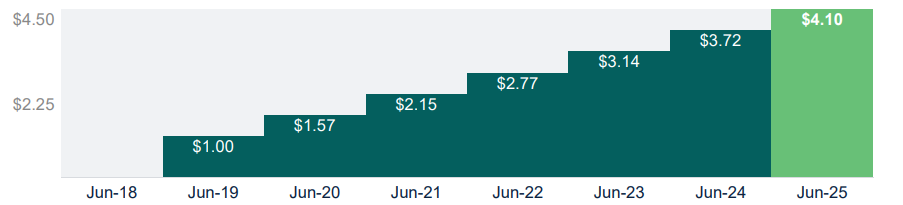
Broadleaf share price history (Jun 2018 – Jun 2025). Share price updated annually, independently reviewed by an external valuer.
5x
total return to shareholders since inception
42%
compound annual growth rate over six years
$0 → $4.10
share price growth from inception to June 2025
How the Capital Mix Evolves
Early Stage: Compounding
Reinvestment of all available cash. Sensible debt. Equity raises for investments. Expanding the shareholder base thoughtfully. Compounding only works if you give it time.
Mid Stage: Stability
Cash flows strengthen. Balance sheet more resilient. Dividends begin. Debt paydown accelerates. Reduced reliance on external equity. Organic growth within existing partner businesses.
Later Stage: Optimisation
Larger dividends. Share buybacks. Capital recycling. Declining new partnerships as high-quality service capacity is reached. Not contraction - maturity.
Growth and Dividends Are Not Opposites
The real power comes from staying invested, allowing earnings to compound, allowing dividends to grow progressively, and allowing enterprise value to expand sustainably.
- Growing earnings per share
- Growing dividends progressively
- Disciplined reinvestment
- Sensible capital structure
Short-term optimisation often sacrifices long-term resilience. We are not trying to grow endlessly for growth’s sake. The objective is sustainable value.
What This Means for Shareholders
If you are a shareholder in Broadleaf, you should expect:
- Measured growth and disciplined capital allocation
- Increasing dividend stability over time
- A declining reliance on external capital
- Optional liquidity mechanisms
The ambition is steady compounding, not volatility. This isn’t a speculative asset – it’s designed to behave more like a well-managed operating company than a promotional growth story.
"Growth with discipline. Income with patience. Reinvest wisely. Return capital progressively. Strengthen the balance sheet. Reduce external equity reliance over time. Create increasing, durable value for remaining shareholders. That’s the balance and that’s the path we’re on."